Body Surgery
Liposuction Korea: Which Areas, and How Long You Stay
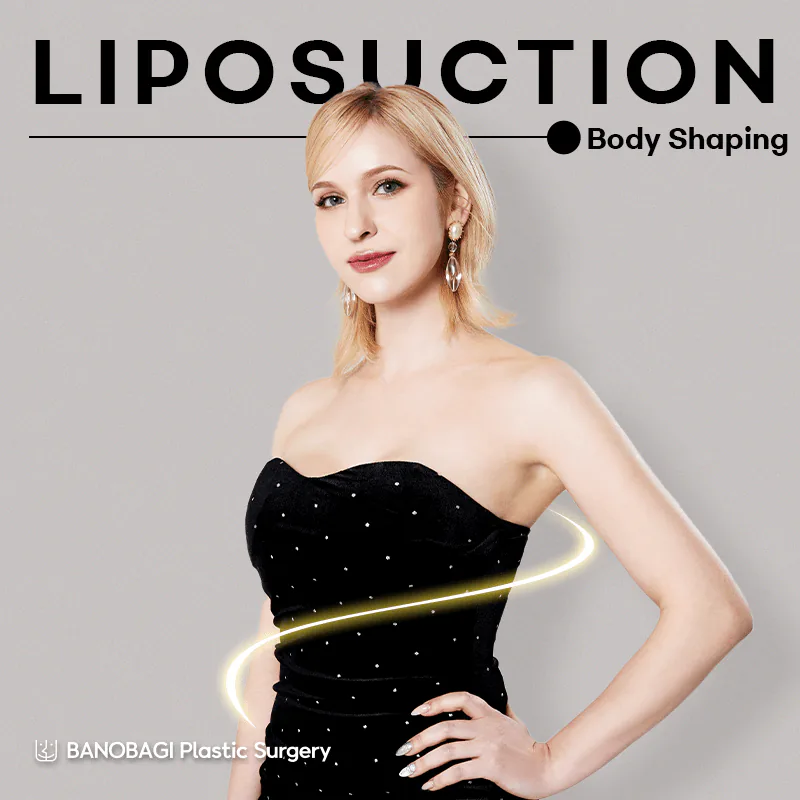
Search liposuction Korea and you get price lists before you get answers. The questions patients actually arrive with in our consultation room are narrower: which areas can be treated, how many days they will be indoors afterwards, and when they are allowed to fly.
At Banobagi in Gangnam, Seoul, most body consultations are with people who already changed their diet and their training. The fat that is left sits in one or two places and does not move. That is the problem liposuction was designed for, and it is a different problem from loose skin or lost volume, which need different operations.
This article covers, using only what our clinic publishes about its own procedures:
- What liposuction changes, and what it cannot change
- How liposuction, body contouring and fat grafting differ
- The operating time, anaesthesia, stitches and recovery figures we publish
- How long a liposuction trip to Seoul usually runs, and what happens after you fly home
Liposuction Korea: What the Surgery Removes, and What It Does Not
Liposuction reduces fat in areas that stay stubborn despite diet and exercise. Fat cells are extracted through a micro-cannula inserted at small incisions, and each area takes about one hour and thirty minutes under general anaesthesia. The design comes first: the surgeon marks the areas against your own body shape before anything is removed.
That distinction decides which operation you are actually being offered:
- Stubborn fat with reasonable skin elasticity: liposuction is the procedure being discussed.
- Skin that hangs after childbirth, repeated weight changes or ageing: that is body contouring, which removes the skin itself.
- Areas that look flat or hollow rather than full: that is fat grafting, which adds volume back.
Fat cells removed from a treated area do not regenerate, but the fat cells left behind can still enlarge if your weight goes up. A stable weight is part of keeping the shape you paid for. Individual results differ.
Liposuction, Body Contouring or Fat Grafting?
Patients often come in asking for one and need another, or need two in one plan. The published details for each of our three body procedures are below.
| Procedure | What it addresses | Anaesthesia and stay | Stitches out |
|---|---|---|---|
| Liposuction | Fat that stays after diet and exercise | General anaesthesia; discharged on the day or 1 night | After 7 days |
| Body contouring | Skin that has lost elasticity; abdomen, arms, thighs, back | General anaesthesia; 2 nights | After 14-20 days |
| Fat grafting | Volume added to face, or to breast and hip contours | Sedation or general anaesthesia; discharged on the day | After 7 days |
Body contouring takes about two hours and thirty minutes, and daily activities resume five to six days after surgery. Liposuction is shorter, and most patients resume daily activities in one to three days. The incision site and its length for body contouring are planned around your own condition, so that part of the plan is confirmed in person.
Who Liposuction Suits
These are the situations our liposuction page lists, and they match what we hear in the consultation room:
- You want an overall slimmer body line rather than one dramatic change.
- You have had enough of repeated diets.
- You have specific areas where the fat will not shift with dieting alone.
- Exercise and dieting are not changing those areas.
- You no longer want your body shape to be a daily source of stress.
Two further points come from the assessment rather than from the wish list. Skin elasticity matters, because skin has to settle over the new contour. And the goal has to be a contour change, not a number on a scale.

Surgery Day and Recovery, Step by Step
Before the operation we run blood tests, an electrocardiogram and a body composition analysis, so the plan is built on your own measurements rather than on an average patient. These are the figures we publish for liposuction.
| Item | Detail |
|---|---|
| Operating time | About 1 hr 30 mins per area |
| Anaesthesia | General anaesthesia |
| Hospitalisation | Discharged on the day, or 1 night |
| Stitches | Removed after 7 days |
| Follow-up visits | About 1-2 visits |
| Daily activities | May resume in 1-3 days |
The operation itself follows four stages: a customised design, fat cell extraction through the micro-cannula, a reduced density of fat cells in the treated area, then post-operative care and recovery. Our surgeons work through micro-incisions with minimal bleeding, and remove fat evenly so the surface stays smooth.
Recovery is mostly compression, walking and patience. Swelling and bruising are expected, and the shape you see in week one is not the shape you keep. How fast swelling settles varies from person to person.

How Long to Stay in Seoul for Liposuction Korea
Stay length is set by the procedure, not by the clinic. Because liposuction stitches come out after seven days, that visit is usually what pushes the trip past a week. The shape of a typical trip looks like this.
| Day | What happens | Notes |
|---|---|---|
| Day 1 | Arrival, in-person consultation, examination, final plan | Bring any previous operation records you have |
| Day 2 | Surgery, then rest at the clinic or your accommodation | Same-day discharge for many procedures; overnight stay for others |
| Days 3-6 | Swelling checks and dressing changes | Most patients are indoors for this stretch |
| Day 7 | Stitch removal for procedures that need it | This visit is the usual reason a stay runs past a week |
| After | Flight home once your surgeon clears you | Do not book a return flight before the plan is confirmed |
For international patients we arrange a 1:1 coordinator, accommodation and transport, and there is a recovery facility for the days between surgery and the flight. If your plan includes body contouring rather than liposuction alone, expect a longer stay: two nights in hospital and stitches out at 14 to 20 days. Ask for your own dates at the consultation instead of working from a general table.
On money: we do not publish a fixed price list, because the plan, and therefore the cost, depends on how many areas are treated and what each one needs. We review your photos and give you a personalised quote. How a Korean surgery quote is built explains what sets the figure, and the full process for foreign patients covers steps, stay and aftercare.
Tests, Anaesthesia and the Name on Your Chart
Ask three questions of any clinic you are considering, including ours.
- Who gives the anaesthetic? At Banobagi, anaesthesia is managed by a team of anaesthesiologists employed by the clinic, not booked per case.
- Who operates? We use a surgeon real-name system, so the surgeon you consult is recorded as the surgeon who operates. All our operating surgeons are board-certified plastic surgeons.
- Is the clinic registered to treat international patients? Under Korean law only clinics registered with the Ministry of Health and Welfare may do so, and the register is publicly searchable. Here is how to check it yourself.
These are arrangements, not outcomes. They tell you who is in the room and who is accountable, which is what you can verify before you book.
If the Result Is Uneven, or Something Goes Wrong
Complications such as bleeding, infection or inflammation may occur after surgery, and individual satisfaction may differ. That is why we plan follow-up as part of the operation rather than as goodwill afterwards, including for patients who have already flown home.
| When | What to check | Who to contact |
|---|---|---|
| Week 1-2 | Swelling, bruising, wound condition, pain getting worse rather than better | Your coordinator, who reaches the surgeon |
| Month 1 | Shape as swelling settles, scar colour, asymmetry between the two sides | Your coordinator, with photos |
| Month 3 | Scar maturation, and whether the result has settled where it was planned | Your coordinator, with photos |
| Anytime | Fever, spreading redness, discharge, sudden pain | Contact the clinic immediately and seek local care the same day |
Two situations come up often enough to name. Skin that sags after heavy dieting or excessive liposuction is treated by body contouring, not by more liposuction. Areas left looking hollow are treated by adding volume back with fat grafting. Both are assessed once swelling has settled, not in the first weeks. You can see the range of real cases our surgeons publish in the before and after gallery.
There are cases where we say no. If the skin over the area has lost its elasticity, we do not recommend liposuction on its own, because removing the fat underneath leaves the loose skin where it was. That is the question body contouring answers, and we would rather say so from your photos than afterwards.
Summary
- Liposuction reduces fat that survives diet and exercise; it does not treat obesity or tighten loose skin.
- Published details: about 1 hr 30 mins per area, general anaesthesia, stitches out after 7 days, discharge the same day or after 1 night, daily activities in 1-3 days.
- Sagging skin is body contouring territory; hollow areas are fat grafting territory. Many plans combine two.
- Plan on a stay that runs past a week, because stitch removal falls on day 7, and do not book the return flight before the plan is confirmed.
- There is no fixed price list. We quote from your photos, then confirm the plan in person on Day 1.
If you want to know which of the three procedures applies to you, send two photos of the area, front and side, standing, in fitted clothing, on WhatsApp, and tell us what you want changed. A coordinator brings them to a surgeon and comes back with the options, a quote and a recommended length of stay. Results and recovery speed differ from person to person.
Frequently asked questions
How much does liposuction in Korea cost?
We do not publish a fixed price list. The number of areas, the anaesthesia plan and whether skin work is needed all change the operation, so we review your photos and give you a personalised quote before you book anything. The final plan is confirmed at the in-person consultation.
Will liposuction make me lose weight?
No. Liposuction is a body contouring procedure, not a treatment for obesity or a substitute for diet and exercise. It reduces fat in areas that stay stubborn despite both. If your main goal is weight loss, that should be settled before surgery.
Can more than one area be treated in the same operation?
Operating time at Banobagi is about one hour and thirty minutes per area, so the number of areas affects the length of the operation and your recovery. How many areas can be combined safely in one session is decided by the operating surgeon after the examination.
Do I have to wear a compression garment afterwards?
Compression garments are part of post-operative care after liposuction. They support the treated area while swelling settles. Your surgeon tells you how long to wear yours, and the coordinator goes through the instructions with you before you fly.
Can I have a consultation before I fly to Seoul?
Yes. An online session can settle which procedures suit your goals, roughly how long you need in Korea, what recovery looks like week by week, and the cost range. It is a consultation and a plan, not a diagnosis. Anything that depends on examining tissue or skin in person is confirmed on the day you arrive.
Will the surgeon I speak to be the one who operates?
Banobagi uses a surgeon real-name system: the surgeon recorded as operating is the surgeon you consult. Anaesthesia is managed by anaesthesiologists employed by the clinic rather than booked per case.
What should I do if I get a fever or spreading redness after I go home?
Fever, spreading redness, discharge or sudden pain are reasons to see a doctor where you are the same day, and to tell the clinic afterwards. For ordinary swelling and bruising questions, message your coordinator with photos.
Sources
Results and recovery differ from person to person. This article is general information, not a diagnosis — your surgeon confirms what suits you at consultation.
Keep reading
 Breast Augmentation Korea: Implant, Fat Transfer and RecoveryBreast augmentation Korea explained by a Banobagi surgeon: implant layers, fat transfer breast augmentation, recovery and stay. Send two photos on WhatsApp.
 How to Check a Medical Tourism Clinic Licence in KoreaHow to check a medical tourism clinic licence in Korea, verify a board-certified plastic surgeon, and what to ask. Send two photos on WhatsApp.
 Plastic Surgery in Korea: How Much Will Your Plan Cost?Plastic surgery in Korea, how much? Why a price list misleads, what changes Korean plastic surgery cost and how to get your quote. Send 2 photos on WhatsApp.