Korea Guide
Plastic Surgery in Korea for Foreigners: Steps, Stay and Aftercare
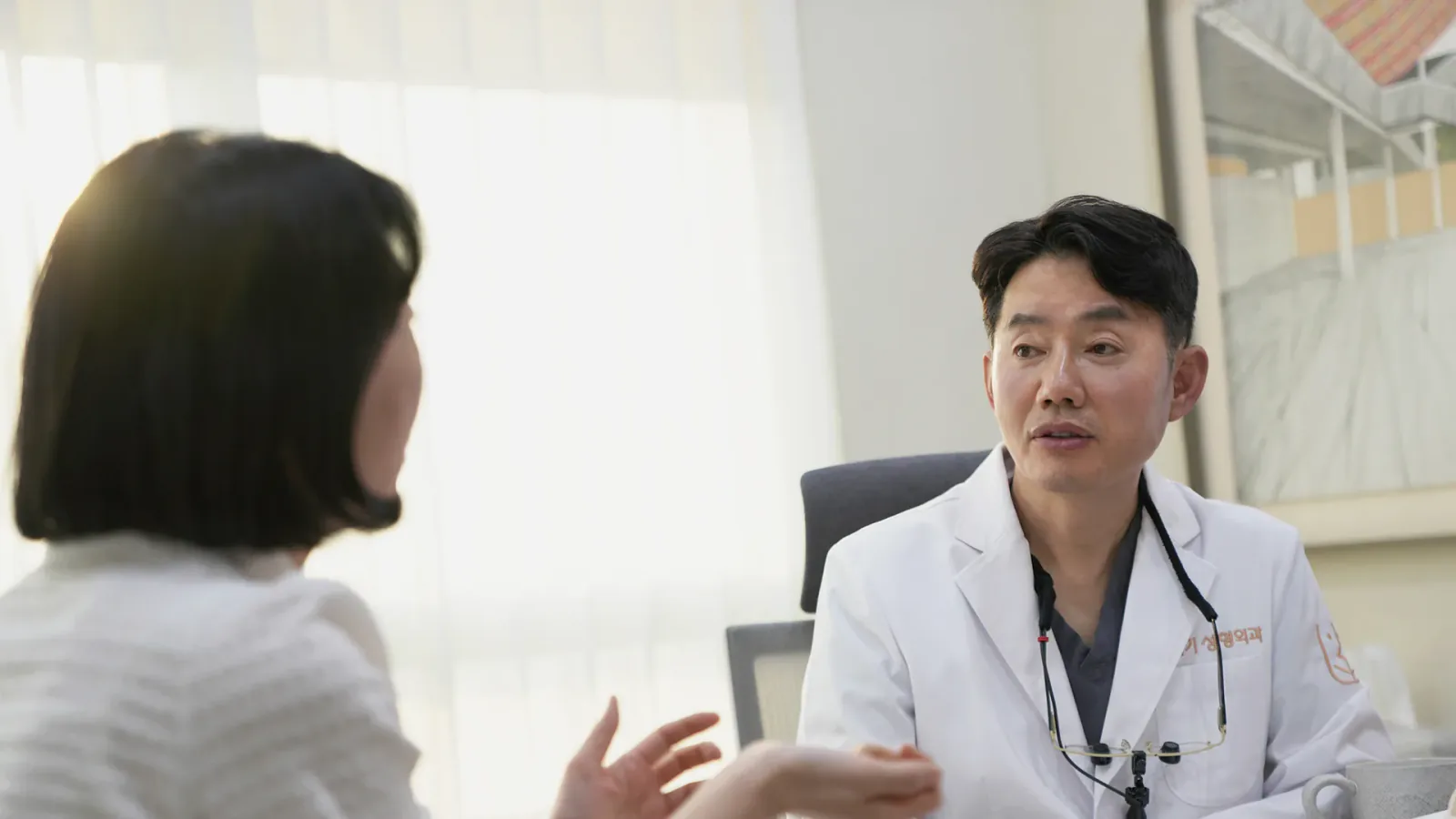
If you live outside Korea and are thinking about plastic surgery in Korea for foreigners, your real questions are practical. Who will operate on you, how long you need to stay, and what happens once you are back home. Those are the questions we answer every day in the consultation room at our clinic in Gangnam, Seoul.
Korean plastic surgery is not hard to book. What is hard is planning a trip where the consultation, the operation and the follow-up connect without gaps. This guide walks through it the way we explain it to patients.
By the end, you will know:
- the four steps from first photo to surgery day, and who is responsible at each stage
- what to check about a clinic before you pay a deposit
- how many days to plan in Seoul for eye, nose and facial contouring surgery
- how aftercare works once you have flown home
How plastic surgery in Korea works for foreigners
Surgery abroad tends to break down at the handovers. You consult with one person, another person operates, and nobody follows up. So we name each stage and the person who holds it.
The process starts before you book a flight:
- Send photos. Tell us what you want to change. For nose and face, a front view, side profile and 45-degree angle help most.
- Matching. A coordinator matches your case to a surgeon and books an online session.
- Online consultation. You talk through options, stay length and a cost range.
- In-person confirmation. The final plan is confirmed on the day you arrive in Seoul, after examination.
| Stage | What happens | Who holds it |
|---|---|---|
| Before | Consultation, imaging where required, surgical plan | The operating surgeon, with a 1:1 coordinator for language and logistics |
| During | The operation, with anaesthesia managed by the clinic's own anaesthesiology team | The same surgeon, recorded under the real-name system |
| After | Stitch removal, swelling checks, the schedule you follow at home | The same surgeon, with the coordinator handling contact after you fly |
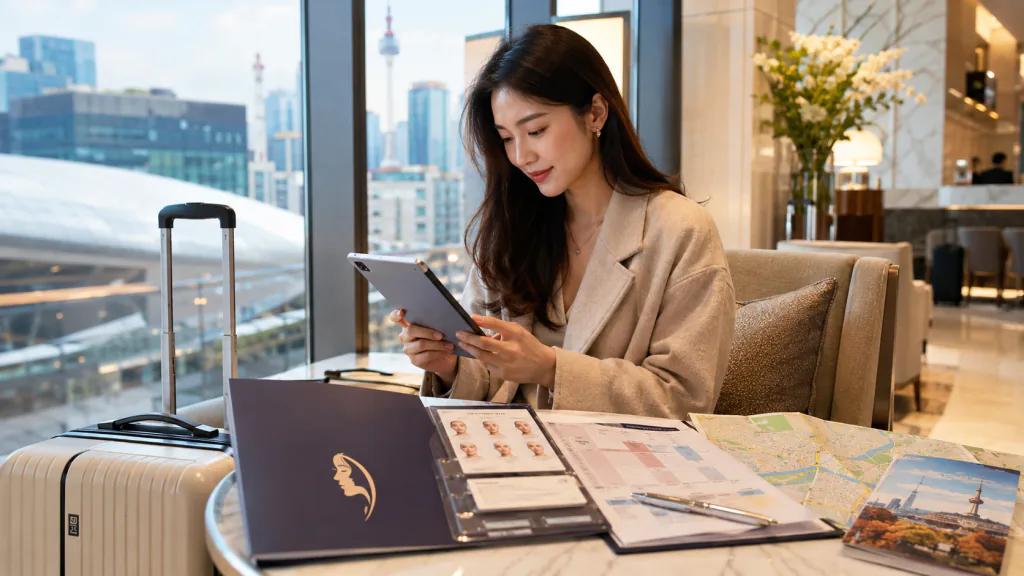
Is it safe to have plastic surgery in Seoul? What to check first
Most clinic websites open with results. The question patients actually arrive with is who is in the operating room, and what is in place if the operation does not go to plan. Here is the checklist we suggest you apply to any clinic, including ours.
- Registration for international patients. Under Korean law, only clinics registered with the Ministry of Health and Welfare may treat international patients. The register is public, so you can check it rather than take a clinic's word for it.
- Who operates. Ask whether the surgeon you consult is recorded as the surgeon who operates. At Banobagi this is the surgeon real-name system.
- Who manages anaesthesia. Ask whether anaesthesiologists are employed by the clinic or booked per case. Our anaesthesiologists are a full-time team. You can see them alongside the surgeons on our doctors page.
- Surgeon credentials. A Korean plastic surgeon should be board-certified in plastic surgery. Ask for the name and check it.
- Where you recover. Ask where you will spend the days between surgery and your flight, and who you call during them.
- What happens after you leave. Ask for the follow-up schedule in writing before you book.
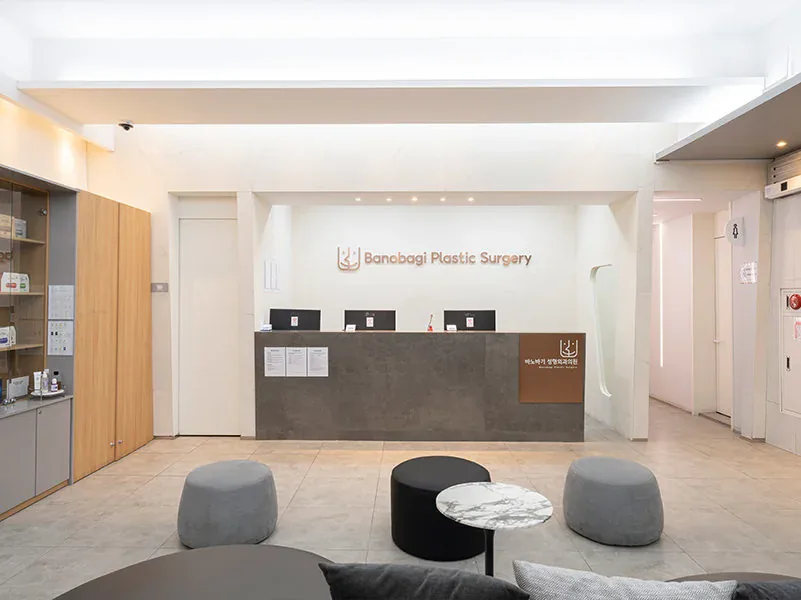
Banobagi was founded in 2000 and is at 517 Nonhyeon-ro, Gangnam-gu, Seoul. Our clinic and how to find us are on the visit page.
If you are considering correction of an earlier operation, safety questions matter even more. Our article on revising unsatisfactory upper eyelid surgery explains what we examine first.
How long do you need to stay in Seoul?
Stay length is set by the procedure, not by the clinic. The most common planning mistake we see is a return flight booked before the plan is confirmed.
A typical short trip
| Day | What happens | Notes |
|---|---|---|
| Day 1 | Arrival, in-person consultation, examination, final plan | Bring any previous operation records |
| Day 2 | Surgery, then rest at the clinic or your accommodation | Same-day discharge for many procedures; overnight stay for others |
| Days 3-6 | Swelling checks and dressing changes | Most patients stay indoors for this stretch |
| Day 7 | Stitch removal for procedures that need it | The usual reason a stay runs past a week |
| After | Flight home once your surgeon clears you | Do not book the return flight before the plan is confirmed |
By procedure
Facial contouring, two-jaw surgery and revision cases need longer than the table above. These figures come from each procedure's own page.
| Procedure | Anaesthesia | Stitches out | Hospital stay | Plan to stay in Seoul |
|---|---|---|---|---|
| Non-incisional double eyelids | Local | After about 3-5 days, if necessary | Same day | At least 7-8 days |
| Incisional double eyelids | Local or sedation | After 5-7 days | Same day | At least 7-8 days |
| Augmentation rhinoplasty | Sedation | After about 10 days | Same day | At least 10 days |
| Jaw reduction | General | After about 14 days | 1 night | At least 10-14 days |
| Two jaw surgery | General | After about 14 days | 3 nights | At least 3 weeks |
For nose surgery, there is a further reason not to rush. Cabin pressure during a flight can cause discomfort if you travel too soon after rhinoplasty. For facial contouring, intraoral stitches come out around day 14, which is why that stay is longer.
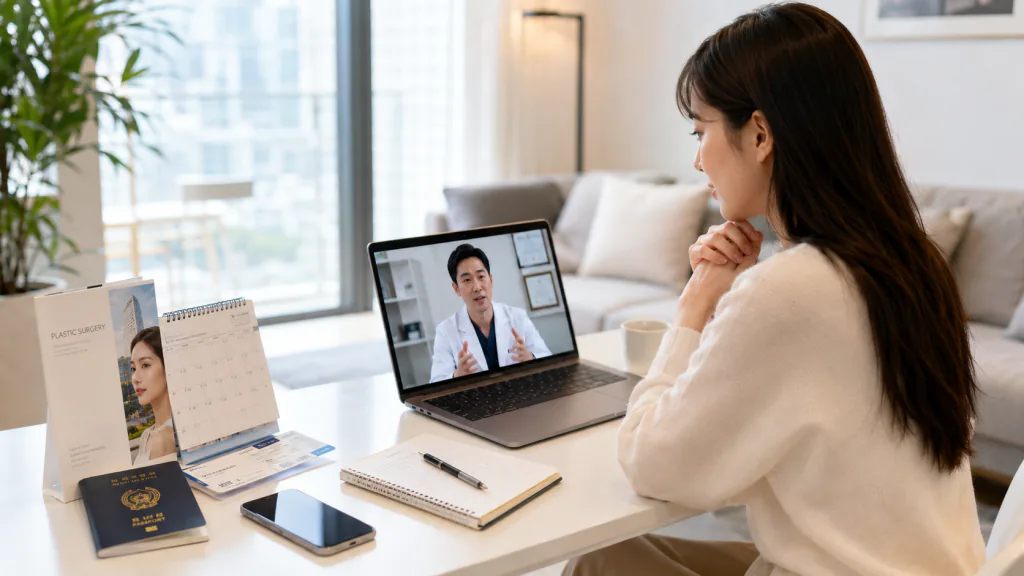
There are trips we advise against. If your dates cannot hold the stay the operation needs, we do not recommend fitting it into this trip, because stitch removal and the final check fall inside those days. Moving the trip is better than flying home in the middle of recovery.
What an online consultation can settle: surgeon, language and cost
You can settle most of the plan before you fly, but not all of it. An online consultation is a consultation and a plan. It is not a diagnosis.
| Can be settled online | Confirmed only in person |
|---|---|
| Which procedures suit what you want to change | The final surgical plan |
| Roughly how long you need to stay in Korea | Measurements that depend on examination or imaging |
| What recovery looks like week by week | Whether an existing implant or previous surgery changes the approach |
| Cost range and what is included | Anaesthesia clearance |
| Which surgeon would take the case | Anything that counts as a diagnosis or a prescription |
On language, you do not need to speak Korean. Your 1:1 coordinator handles language and logistics before, during and after surgery. The coordinator also stays in contact once you are home.
On cost, we do not quote a number without seeing your face. Two people asking for the same procedure name often need different plans. After we see your photos, we send a cost range with what it covers. The online consultation page explains the format.
A note on the law. Remote care for international patients was written into Korean law in the Act on Supporting Overseas Expansion of Healthcare and Attracting International Patients. That provision takes effect in May 2027. Until then, remote sessions are consultation and planning only.
Preparing for Korean plastic surgery before you fly
Medical tourism in Korea goes more smoothly when preparation starts weeks before the flight. These points come from the preparation guidance on our eye surgery, nose surgery and facial contouring pages. Your coordinator sends a personal checklist for your own procedure.
- 2-4 weeks before arrival. Stop weight-loss medications such as Wegovy or Mounjaro at least 2 weeks before surgery. Stop blood thinners at least 1 week before, after checking with your prescribing doctor. Tell us about every regular medication, as some need review by the anaesthesiologist.
- 1 week before. Complete pre-operative blood tests as directed. Remove gel nails and nail polish, because oxygen saturation is monitored through your fingernails during surgery.
- The day before. Fast for 6 to 8 hours before surgery. Wash your face and apply no creams or make-up. Pack front-opening clothes so nothing is pulled over your face.
- What to bring. Your passport, a list of current medications, previous operation records, and any prior CT scans for facial contouring.
Three things patients often get wrong
- "One week is enough for anything." Eyelid surgery alone needs at least 7-8 days in Seoul. Two-jaw surgery needs at least 3 weeks in Korea.
- "The online plan is final." Measurements and anaesthesia clearance are confirmed only in person, on arrival.
- "Revision can be booked straight away." For eyelid and nose revision, at least 6 months should have passed since the original procedure. Our article on when double jaw surgery is medically necessary covers cases where function, not only appearance, drives the decision.
Aftercare once you are back home
Once a patient flies home, many overseas surgery arrangements go quiet. These are the checkpoints we keep, and who you contact at each one.
| When | What to check | Who to contact |
|---|---|---|
| Week 1-2 | Swelling, bruising, wound condition, pain that is getting worse rather than better | Your coordinator, who reaches the surgeon |
| Month 1 | Shape as swelling settles, scar colour, asymmetry between the two sides | Your coordinator, with photos |
| Month 3 | Scar maturation and whether the result has settled where it was planned | Your coordinator, with photos |
| Anytime | Fever, spreading redness, discharge, sudden pain, or a change in vision after eye surgery | Contact the clinic and seek local care the same day |
How does South Korea plastic surgery compare with having the same operation where you live? The honest answer is that it depends on the clinic at home. The table sets out what to ask on each side.
| Question | Banobagi, Seoul | Clinic at home |
|---|---|---|
| Is the consulting surgeon the operating surgeon? | Yes, recorded under the real-name system | Varies by clinic |
| Who manages anaesthesia? | The clinic's full-time anaesthesiologists | Varies by clinic |
| Time away from home | From at least 7-8 days (eyelids) to at least 3 weeks (two-jaw) | No travel stay |
| Language support | 1:1 coordinator | Your own language |
| Follow-up after surgery | Photo checkpoints at month 1 and month 3 via your coordinator | Varies by clinic |
| Urgent problems | Local doctor the same day, then tell the clinic | Your own clinic |
Results and healing vary between individuals, in Seoul and anywhere else.
Summary
- Plastic surgery in Korea for foreigners runs in four steps: photos, matching, online consultation, and in-person confirmation on arrival.
- Before booking, check registration for international patients, who operates, and who manages anaesthesia.
- Plan at least 7-8 days in Seoul for eyelid surgery, at least 10 days for nose surgery, and at least 3 weeks for two-jaw surgery.
- An online consultation gives you a plan, a stay length and a cost range, but not a diagnosis.
- Aftercare continues from home through your coordinator, with photo checks at month 1 and month 3.
The most useful first step is simple. Send a front photo and a side photo on WhatsApp, and tell us what you want to change. We reply with the procedures that fit, a suggested stay length and a cost range. Every face heals differently, so the final plan is always confirmed in person.
Frequently asked questions
Can foreigners have plastic surgery in Korea on a short trip?
Yes, as long as the trip is planned around the procedure rather than the other way round. Eyelid surgery usually needs at least 7 to 8 days in Seoul, nose surgery at least 10 days, and two-jaw surgery at least 3 weeks. Your surgeon confirms the actual dates after the consultation.
How much does plastic surgery in Korea cost for a foreigner?
We do not publish fixed prices, because the plan depends on what you want to change and what your anatomy allows. Send photos on WhatsApp and we reply with a cost range and what it includes. The final plan and quote are confirmed in person when you arrive.
Do I need to speak Korean?
No. A 1:1 coordinator handles language and logistics before, during and after your stay, and stays in contact once you have flown home.
Can I combine two procedures in one trip?
Often, yes. Double eyelids with ptosis correction, and augmentation rhinoplasty with alarplasty, are common combinations. Whether a combination suits you, and how it changes your stay, is decided in the consultation.
I had surgery elsewhere and I am not happy with it. Can I come for revision?
Revision is planned around what the previous surgery left behind, so bring your operation records. For eyelid and nose revision, at least 6 months should have passed since the original procedure. Facial contouring revision usually needs a longer stay.
What happens if I notice a problem after I fly home?
Fever, spreading redness, discharge, sudden pain, or a change in vision after eye surgery are reasons to see a doctor where you are on the same day, and to contact the clinic. For everything else, your coordinator collects photos and passes them to the surgeon.
Sources
- Banobagi: Eye Surgery
- Banobagi: Nose Surgery
- Banobagi: Facial Contouring
- Banobagi: Non-Incisional Double Eyelid Surgery
- Banobagi: Incisional Double Eyelid Surgery
- Banobagi: Augmentation Rhinoplasty
- Banobagi: Jaw (Mandible) Reduction
- Banobagi: Two Jaw Surgery
- Medical Korea (KHIDI): hospitals registered for international patients
Results and recovery differ from person to person. This article is general information, not a diagnosis — your surgeon confirms what suits you at consultation.
Keep reading
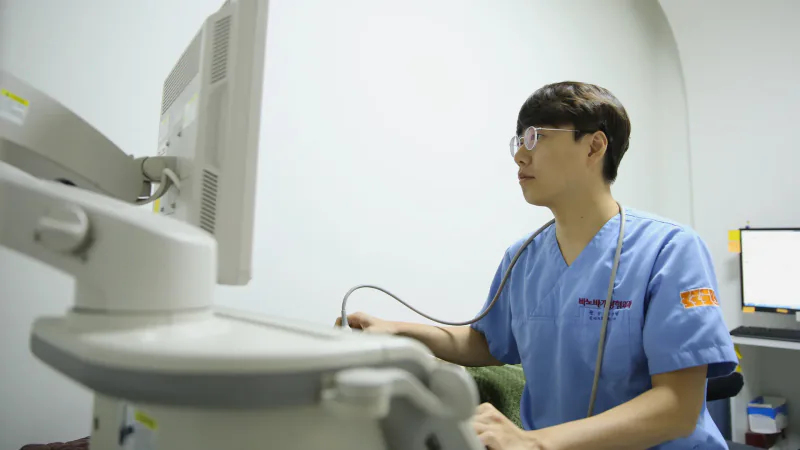 How to Check a Medical Tourism Clinic Licence in KoreaHow to check a medical tourism clinic licence in Korea, verify a board-certified plastic surgeon, and what to ask. Send two photos on WhatsApp.
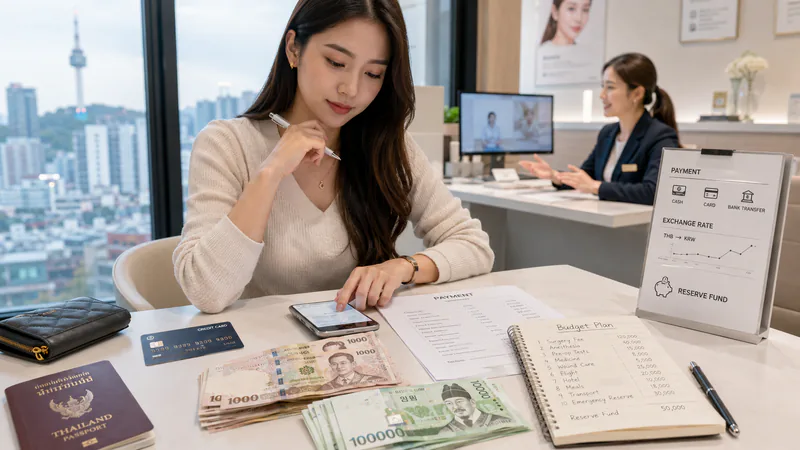 Plastic Surgery in Korea: How Much Will Your Plan Cost?Plastic surgery in Korea, how much? Why a price list misleads, what changes Korean plastic surgery cost and how to get your quote. Send 2 photos on WhatsApp.
 Korean Plastic Surgery Before and After: How to Read the Photos ProperlyHow to read korean plastic surgery before and after photos: angle, lighting, swelling stage and rhinoplasty timelines. Send two photos on WhatsApp.